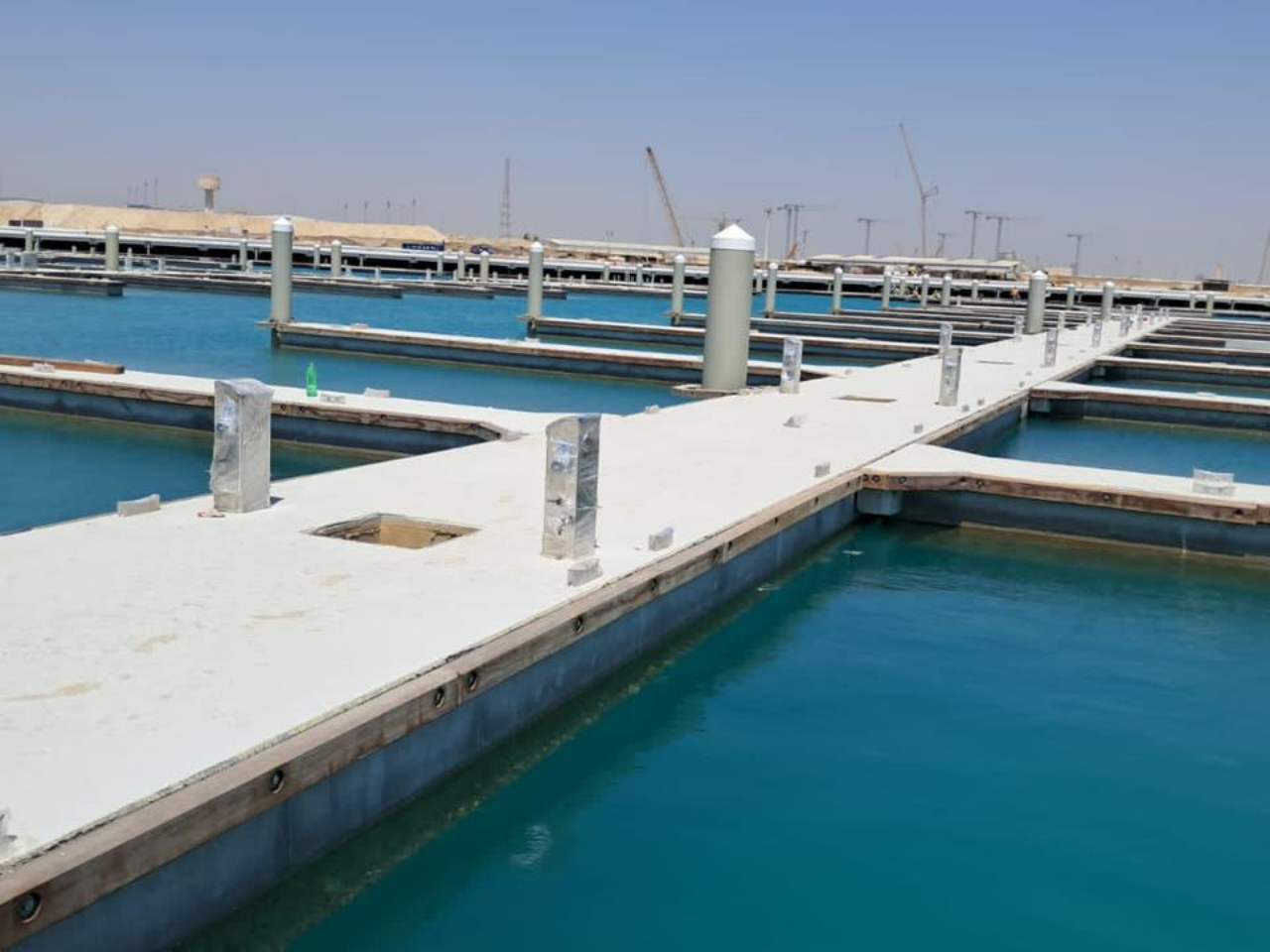
A marina mooring system should not be treated as a few ropes and fittings added after the berth is built. It is the system that controls vessel movement, protects dock structures, reduces impact damage, supports safe boarding, and keeps marina operations predictable during wind, wake, surge, tidal change, and daily vessel traffic.
In Saudi Arabia, especially along the Red Sea and Arabian Gulf, mooring design must respond to heat, salinity, corrosion, vessel mix, berth geometry, floating or fixed dock behavior, water depth, and long-term maintenance access. Mooring systems should be integrated with dock structures, steel components, underwater interfaces, corrosion-protection measures, and operational safety requirements from the earliest planning stages.
Mooring Design Starts With the Berth Load
The right mooring system is designed around the load path from vessel to line, line to fitting, fitting to structure, and structure to dock or seabed support. Boat length alone is not enough. Windage, vessel weight, berth exposure, line angle, dock type, fender position, water movement, and operating frequency all affect the final design.
The berth should be reviewed to understand how the vessel approaches, where loads transfer through the mooring system, how the dock structure receives those forces, how hardware will perform in corrosive marine conditions, and how the system can be safely inspected over time. This helps prevent the mooring arrangement from becoming a hidden weak point within the marina.
What a Mooring System Really Controls
A mooring system does not hold a vessel completely still. It controls movement within safe limits. The vessel must be able to respond to wind, wake, tide, current, and passing traffic without striking the dock, overloading fittings, damaging the hull, or making boarding unsafe.
That control comes from the full arrangement: bow lines, stern lines, spring lines, breast lines, cleats, bollards, fairleads, piles, anchors, chains, pendants, fenders, and dock structure. If one part is selected without reviewing the full system, the marina may face chafed lines, poor vessel alignment, overloaded hardware, or repeated dock damage.
Red Sea and Gulf Conditions Change the Engineering
Saudi marina conditions are not generic. Red Sea and Arabian Gulf sites may face high salinity, high heat, humidity, dust, UV exposure, marine growth, seasonal traffic, and busy waterfront activity. These conditions affect ropes, chains, shackles, fasteners, steelwork, coatings, floating dock joints, and submerged hardware.
KAUST research on Red Sea seawater conditions highlights temperature and salinity variation along the Saudi Red Sea coast through its Red Sea research. For marina teams, this reinforces why corrosion planning, material selection, and inspection access should be included before mooring hardware is installed.
Line Angles Decide How the Berth Performs
Mooring lines are not effective only because they are strong. They work because they are placed at the right angle. Poor line angles can pull the vessel into the dock, allow too much sideways movement, overload one fitting, or make boarding unsafe when the water level changes.
Spring lines are especially important because they control forward and backward movement. Breast lines help control side movement, but they can become overloaded if they are too short or too steep. A strong marina mooring layout balances these forces instead of forcing one line or fitting to do all the work.
Dock Structure Must Match Mooring Loads
A cleat or bollard is only as reliable as the structure behind it. A high-capacity fitting installed on weak decking, thin steel, corroded framing, poor concrete, or insufficient backing can fail even if the fitting itself is correctly rated.
Mooring loads should be checked against dock framing, pile systems, steel supports, access walkways, and berth layouts to ensure the supporting structure can safely receive and distribute operational forces. This helps confirm the load path before cleats, bollards, chains, or anchor hardware are installed.
Fixed Docks and Floating Docks Need Different Logic
Fixed docks do not move with the water, so the mooring system must allow vessel movement without creating steep line angles during level changes. If the lines are too short or poorly placed, the vessel can hang, surge, rub, or overload the hardware.
Floating docks move with the water, but they still transfer loads through guide piles, hinges, anchors, connectors, and the floating structure. A berth that feels stable in calm water can behave differently under wake, wind, or crowded marina use.
Seabed Conditions Affect Anchor-Based Mooring
Some marinas rely mainly on dock-mounted fittings and piles. Others may need anchor systems, chains, sinkers, mooring blocks, elastic components, or seabed connections. These systems depend on bottom conditions, water depth, environmental restrictions, and inspection access.
A mooring anchor that performs well in sand may not behave the same way in rock, silt, coral-sensitive zones, or disturbed seabed. Before anchor-based mooring is selected, the project should understand holding capacity, installation method, seabed interface, and how the system will be verified after placement.
Corrosion Protection Is Not Optional
Mooring hardware works in one of the harshest parts of the marina: the saltwater and splash zone. Chains, shackles, bolts, plates, cleats, bollards, piles, and embedded steel can lose working strength if corrosion is not controlled.
Mooring hardware decisions should be coordinated with corrosion-control strategies where submerged steel, piles, brackets, chains, and marina support systems require long-term protection. The objective is to preserve the working strength and reliability of the system, not just its surface appearance.
Fendering and Mooring Must Work Together
Fenders reduce contact energy between the vessel and the dock. Mooring lines control vessel position. If the fendering is weak, the vessel may damage the dock even when the lines are correct. If the mooring arrangement is weak, the vessel may ride over, miss, or overload the fenders.
The two systems should be reviewed together. Vessel freeboard, hull shape, berth height, wake exposure, visitor docking behavior, and expected impact zones all affect the final arrangement. A marina should not treat fenders as accessories added after mooring hardware is installed.
Saudi Marina Rules Require Operational Control
Saudi Red Sea Authority marina regulation requires marina design and operation to consider marina services, safe utilities, sufficient draught, sustainability, and operating responsibilities through its Saudi marina regulation.
For mooring design, this means the berth should support safe user movement, suitable access, emergency response, environmental care, inspection planning, and maintenance responsibility. A mooring layout is not complete just because a vessel can be tied up. It must support safe marina operation.
Underwater Inspection Confirms the Hidden Interface
Many mooring problems are hidden below the waterline. Chains can twist, anchors can shift, piles can corrode, shackles can wear, and seabed contact points can change over time. Surface inspection alone may miss these risks until the system performs badly. Direct inspection and documentation through underwater inspection services can help identify issues before they affect marina operations.
Hardware Should Follow the Load Path
Cleats, bollards, fairleads, shackles, chains, turnbuckles, and connectors should not be selected one by one without checking how the load moves through the full system. Each part should match the force path from vessel movement to structural support.
Marina mooring upgrades may require custom backing plates, brackets, frames, fittings, or reinforcement details that are not available through standard hardware alone. Proper marine steel fabrication helps create stronger connections between mooring components and the supporting structure, reducing the risk of weak points under real operating conditions.
Professional Marina Guidance Supports Better Design
PIANC describes its marina design guidance as a reference for designers and practitioners involved in marina development and operation through its PIANC marina guidance.
For mooring systems, this supports a practical principle: strong marina design depends on full-system thinking. Oversized parts alone are not enough. The berth needs the right line geometry, hardware capacity, structural support, corrosion control, inspection access, and operating procedures.
What Skylance Reviews Before Mooring Installation
Before a mooring system is installed or upgraded, Skylance can review vessel range, berth layout, dock type, line angles, water depth, wave exposure, wind direction, fender position, hardware capacity, corrosion risk, underwater conditions, and maintenance access.
This review helps prevent common failures such as overloaded cleats, poor vessel alignment, chafed lines, weak backing structure, uninspected submerged hardware, and equipment that cannot be maintained safely after installation.
Installation Records Protect the Marina Later
A completed mooring project should leave useful records, not only installed hardware. These records may include hardware specifications, line arrangement, anchor details, underwater inspection notes, load assumptions, fender layout, corrosion-protection details, and maintenance recommendations.
This matters because marina teams need a baseline for future inspections, storm checks, upgrades, insurance discussions, and repair planning. If the system is not documented, future maintenance teams may not know what was installed, why it was selected, or where hidden risks exist.
How Skylance Supports Saudi Mooring Projects
Skylance supports marina mooring projects by connecting dock structure, underwater inspection, steelwork, corrosion protection, installation planning, and final documentation. This is important because mooring failures often happen at the interface between disciplines, not inside one single component.
For Red Sea and Arabian Gulf marina owners, operators, developers, and waterfront project teams, Skylance can help review existing berths, plan upgrades, support installation, inspect underwater components, and document the final system. To discuss a marina mooring scope, contact Skylance.
Final Takeaway
A marina mooring system should control vessel movement, protect dock structures, support safe boarding, reduce maintenance risk, and remain inspectable over time. The strongest systems are designed around real berth conditions, not only vessel length or hardware size.
In Saudi Arabia’s Red Sea and Arabian Gulf environments, mooring design must account for salinity, heat, corrosion, vessel mix, water movement, dock structure, underwater interfaces, and operational safety. With the right review, planning, and installation approach, marina mooring systems can be safer, more durable, easier to inspect, and better suited to long-term operation in Saudi coastal environments.
Frequently Asked Questions
What is a marina mooring system?
A marina mooring system is the arrangement of lines, fittings, anchors, piles, fenders, and structural supports that keeps vessels controlled at berth.
Why is mooring design important?
Poor mooring design can allow excessive vessel movement, hardware overload, hull contact, dock damage, unsafe boarding, and faster wear on lines and fittings.
Do Red Sea marinas need special mooring planning?
Yes. Heat, salinity, marine growth, corrosion exposure, and active waterfront operations can affect material choice, line layout, inspection access, and maintenance planning.
What should be checked before installation?
Vessel size, windage, line angles, berth layout, dock structure, water depth, seabed condition, fender position, hardware capacity, and corrosion risk should be reviewed.
How often should mooring systems be inspected?
Inspection frequency depends on marina use, exposure, hardware type, and local conditions. High-use berths and exposed sites usually need more frequent checks.
Can Skylance help with mooring upgrades?
Yes. Skylance can support mooring review, underwater inspection, steelwork, corrosion protection, installation planning, documentation, and marina upgrade support.