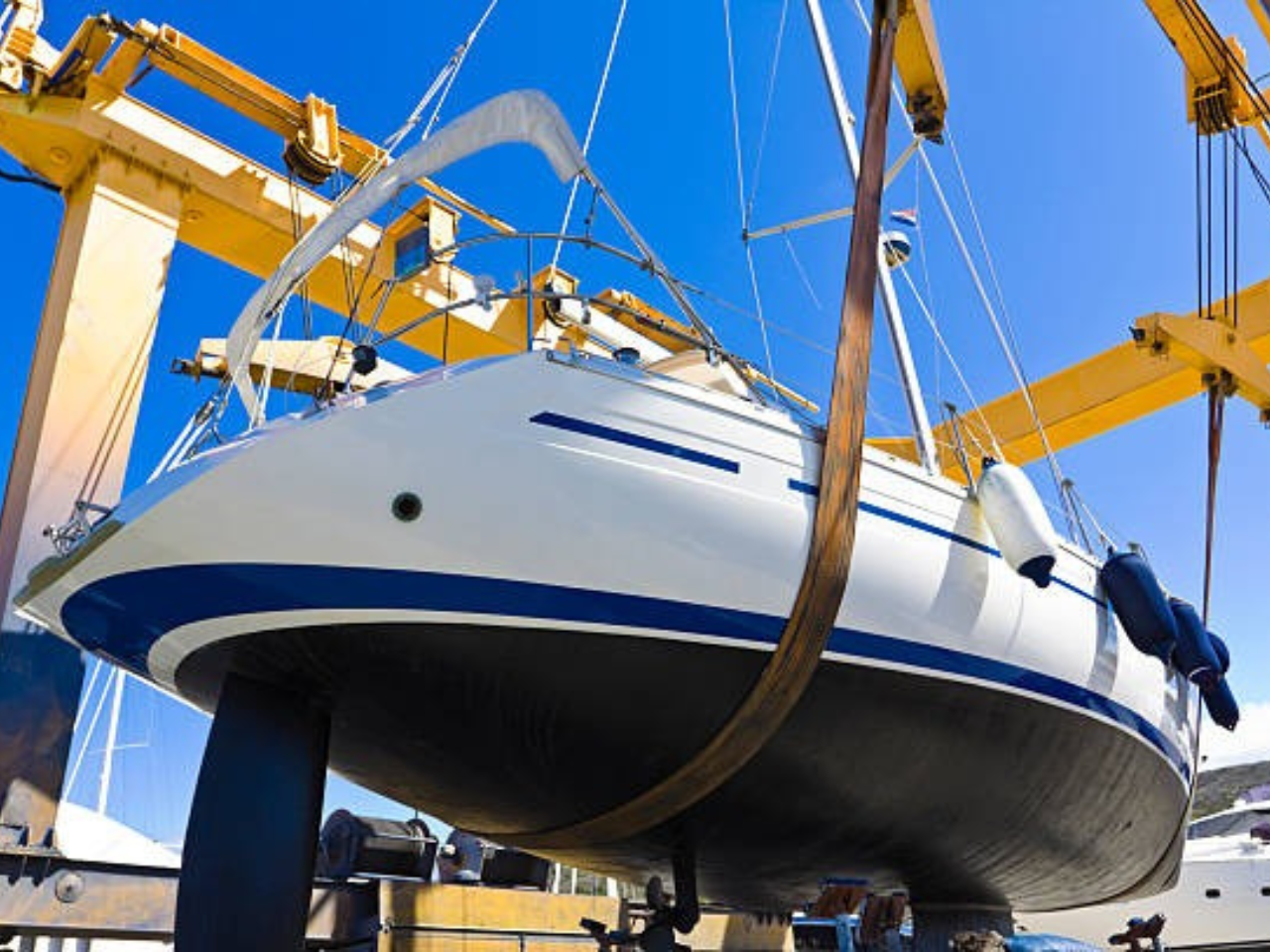
Choosing the right boatlift system for a Saudi marina involves far more than matching equipment capacity to vessel weight. A boatlift becomes part of the marina’s infrastructure, affecting vessel protection, dock operations, electrical systems, maintenance planning, safety procedures, and long-term operating costs.
Whether the project is located on the Red Sea coast in Jeddah, Yanbu, or NEOM, or along the Arabian Gulf in Dammam and Jubail, local environmental conditions can significantly influence lift performance and service life. High salinity, heat, humidity, UV exposure, marine growth, and heavy marina traffic all place demands on lifting equipment that should be considered before procurement.
Start With the Berth, Not the Lift Catalogue
The right boatlift depends on how the marina berth actually works. Vessel weight matters, but it is only one input. The decision should also consider hull form, water depth, tidal movement, wave and wake exposure, dock structure, user traffic, power availability, maintenance access, corrosion exposure, and future vessel changes.
Before installation, the full berth interface should be reviewed, including how the vessel approaches the lift, how loads transfer into the dock structure, how power reaches the equipment, how service points are accessed, and how the system will be tested before handover. This helps prevent the lift from becoming a weak point in marina operations.
What a Boatlift System Actually Controls
A boatlift raises a vessel above the waterline, but its deeper purpose is control. It controls hull exposure, marine growth, floating-debris contact, wake movement, berth movement, and access for cleaning or maintenance. In high-use marinas, that control can reduce wear on vessels and improve the daily experience for owners and operators.
The system must support the vessel without creating stress. Engines, fuel, batteries, water tanks, gear, hull shape, keel depth, shafts, outdrives, and trim tabs all affect load distribution. A lift that is strong enough on paper can still be wrong if the vessel does not sit on it correctly.
Fixed Lifts for Predictable Berths
Fixed boatlifts are usually connected to piles, dock frames, seawalls, or permanent structures. They work best where berth geometry is stable, vessel sizes are known, and the supporting structure can safely receive the lifting loads.
Their advantage is stability. Their limitation is flexibility. If a marina expects future berth changes, mixed vessel sizes, or irregular water movement, the fixed lift should be reviewed with the dock structure before procurement. Coordination with dock services helps ensure the lift does not overload or conflict with the berth arrangement.
Floating Lifts for Flexible Marina Areas
Floating lifts use buoyancy to support or raise the vessel. They may suit smaller craft, personal watercraft, modular docks, or marina areas where fixed piles are not practical. They can also help where the dock itself moves with water levels.
The main concern is behavior under real site conditions. Wind, wake, boarding movement, current, vessel approach angle, and neighboring traffic can affect stability. A floating lift should be selected only after the berth exposure and user pattern are understood.
Hydraulic Lifts for Controlled User Experience
Hydraulic lifts use cylinders, pumps, hoses, valves, and controls to raise and lower the vessel. They can be useful where smooth movement, faster operation, and cleaner user control are important, especially in premium marina or private berth environments.
In Saudi coastal conditions, the hydraulic system must be easy to inspect and protect. Heat, salinity, humidity, and dust can affect seals, hoses, power units, fittings, and control boxes. Access, protection, and maintenance routes should be reviewed before the system is considered ready for operation.
Elevator Lifts for Seawalls and Tight Edges
Elevator-style boatlifts move the vessel along an angled rail or track. They may suit seawalls, bulkheads, narrow berth edges, or waterfront locations where a traditional pile-supported system is not practical.
These systems depend heavily on alignment. Track angle, anchoring, water depth, hull clearance, and approach direction must all work together. If the rail path is poorly planned, the lift can bind, lift unevenly, or make docking more difficult than it should be.
Travel Lifts for Service and Haul-Out Operations
A marina that handles larger vessels may need a travel lift, mobile hoist, or heavy handling system instead of individual berth lifts. This is not only a lifting decision. It affects haul-out routes, turning space, hardstand strength, washdown areas, drainage, sling access, staff movement, and service scheduling.
Heavy marina handling systems often require structural coordination, mechanical fit-up, electrical planning, and commissioning support to operate reliably and safely. This helps the marina treat the travel lift as an operating asset, not only a purchased machine.
Saudi Marina Requirements Change the Planning
Saudi marina projects must be planned around local operating responsibilities, not only supplier specifications. The Saudi Red Sea Authority states that marina design and operation requirements include safety, sustainability, utilities, sufficient draught, and environmental considerations through its marina regulation.
For a boatlift project, that means the system should be reviewed for user safety, access, electrical service, berth depth, operating procedure, maintenance control, and environmental exposure before installation.These requirements should be connected to practical field execution before installation begins.
Red Sea Conditions Are Not Generic Marina Conditions
Saudi coastal sites can expose equipment to heat, salinity, humidity, high UV, dust, marine growth, active berths, and seasonal traffic pressure. These conditions affect steel components, fasteners, coatings, hydraulic fittings, cables, guide posts, panels, and control stations.
KAUST describes major work focused on preserving Red Sea reef ecosystems through its Red Sea research. For marina owners, this reinforces the need to think carefully about equipment selection, service access, washdown control, and maintenance practices near sensitive marine environments.
Power and Controls Should Be Designed Before Installation
A boatlift can fail operationally even when the frame is strong. Motors, pumps, control panels, limit switches, emergency stops, isolation points, cable routing, grounding, and operator stations all affect reliability and safety.
Boatlift systems often require power, controls, protected enclosures, testing, and commissioning to achieve reliable long-term operation. This is especially important for marina environments where water, salt, heat, and public access increase the consequences of poor electrical planning.
Capacity Must Include Real Operating Weight
A common mistake is selecting a lift from dry vessel weight alone. Real operating weight may include fuel, water, batteries, engines, tenders, tools, fishing gear, safety equipment, and later owner upgrades. The lift also needs margin for how often it will be used and how the weight is distributed.
Capacity should never be treated as a single number. The review should include vessel type, loading pattern, hull support, operational frequency, future vessel range, and exposure conditions. A lift that barely meets today’s requirement may become a maintenance problem tomorrow.
Hull Support Is Where Many Lift Decisions Fail
Different vessels need different support. A deep-V hull, catamaran, pontoon, workboat, RIB, personal watercraft, and yacht cannot all be supported the same way. Bunk angle, cradle width, sling position, keel clearance, propeller clearance, and hull contact points must match the vessel profile.
Poor support can damage coatings, transducers, trim tabs, shafts, props, or the hull itself. The lift should protect the vessel while it is raised, lowered, idle, and exposed to marina movement. That is why the support arrangement should be reviewed before the equipment reaches site.
Maintenance Access Should Be Designed Into the System
A lift that is hard to inspect is a lift that will be poorly maintained. Cables, pulleys, cylinders, fasteners, motors, guide posts, panels, limit switches, and corrosion-prone areas should be reachable without unsafe workarounds.
PIANC publishes marina design guidance for practitioners involved in marina development and operations through its PIANC guidelines. This reinforces the practical principle that marina equipment should be selected for long-term operation, not only installation day.
Installation Should Finish With Proof, Not Assumptions
A completed boatlift installation should leave the marina team with clear records. That may include capacity data, anchoring details, alignment checks, electrical test results, control testing, safety checks, commissioning notes, maintenance access points, and operator instructions.
These records matter because future servicing depends on knowing what was installed and accepted. Skylance uses handover evidence to reduce confusion during later inspection, troubleshooting, adjustment, or upgrade work.
How Skylance Helps Select the Right System
Skylance reviews the berth, dock structure, vessel range, water depth, exposure, electrical access, corrosion conditions, control locations, safety clearances, and maintenance routes before treating a boatlift system as ready for installation.
This wider review helps avoid the most common project gap: buying a lift that technically works but does not fit the marina’s real operation. To review a new lift, upgrade, or marina equipment scope, contact Skylance before procurement or installation begins.
Final Takeaway
The best boatlift system is not always the largest, newest, or most expensive option. It is the system that matches the berth, vessel type, dock structure, water movement, electrical supply, maintenance plan, and Saudi coastal environment.
For Saudi marina owners and waterfront operators, the lift decision should be made before equipment is ordered, not after installation problems appear. With the right review, boatlift systems can protect vessels, improve marina workflow, reduce service risk, and support long-term operational reliability.
Frequently Asked Questions
What does a boatlift system do?
A boatlift raises a vessel out of the water to reduce hull exposure, marine growth, wake movement, floating debris contact, and long-term water-related wear.
Which lift is best for a Saudi marina?
The best type depends on berth layout, vessel range, water depth, dock structure, wave exposure, power supply, corrosion conditions, and maintenance access.
Are fixed lifts better than floating lifts?
Fixed lifts are better for stable berths with known vessel sizes. Floating lifts may be better for modular docks, smaller craft, or areas with moving water levels.
Why does hull support matter?
Incorrect support can stress the hull, damage coatings, affect props or shafts, and create uneven loading. The support system must match the vessel profile.
What should be checked before installation?
Check vessel weight, hull shape, berth exposure, dock capacity, water depth, electrical supply, corrosion risk, access clearance, and maintenance requirements.
Can Skylance support boatlift projects?
Yes. Skylance can support boatlift selection, dock interface review, electromechanical coordination, installation, testing, commissioning, and handover documentation.